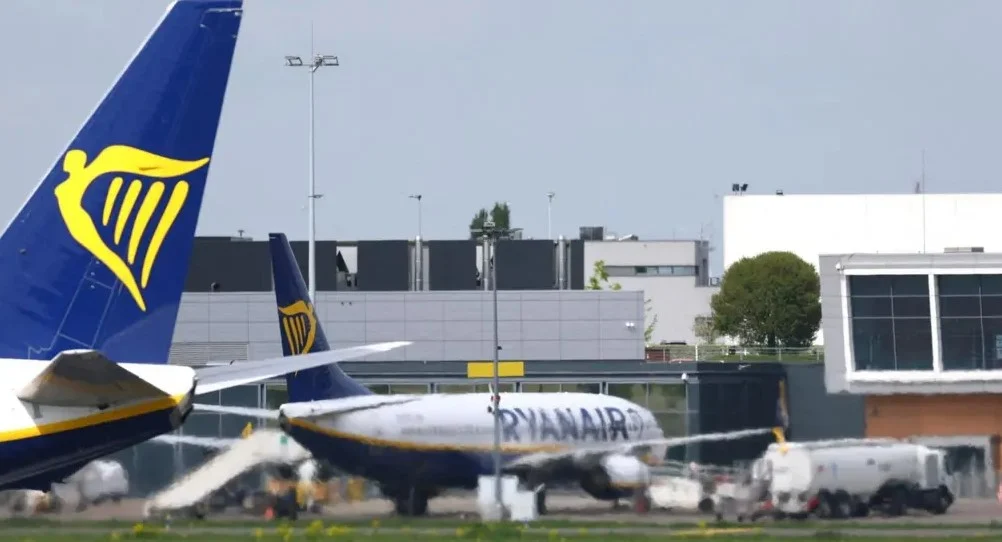
A string of bomb alerts targeted about ten commercial flights across Europe on Tuesday, triggering high-level security responses, temporary airport closures, and military jet deployments. Authorities confirmed that all affected aircraft managed to land without harm and thorough searches revealed no explosives on board.
The Irish low-cost carrier Ryanair bore the brunt of the disruption, with four of its passenger planes receiving threats. According to Punch, other carriers caught in the alerts included Scandinavian airline SAS, Polish operator LOT, and budget carrier Wizz Air.
In the United Kingdom, London’s Metropolitan Police noted that it received alerts regarding four separate planes scheduled to leave from or touch down at Heathrow Airport. The force also looked into another threat linked to a plane at Manchester Airport, later reporting that full security sweeps turned up no actual danger.
Airports in Poland faced notable disruption as two incoming flights received warnings. An SAS flight from Copenhagen landed at Warsaw Chopin Airport, leading officials to shut down one runway during inspections, while a LOT flight from Heathrow was redirected to Warsaw Modlin Airport. Modlin was temporarily shut down, but airport spokesman Adam Szablowski told AFP that inspectors discovered nothing dangerous.
In Italy, the national air force scrambled fighter jets to accompany a Ryanair service arriving from Dublin as it approached Rome-Fiumicino. Emergency bomb squads also screened an earlier Ryanair plane from Lisbon, with Rome airport officials confirming that all sweeps on the travellers, their baggage, and the aircraft came back clean.
Spanish airport manager Aena reported that an emergency response was triggered after a Ryanair flight from Manchester landed safely at Murcia. Similar security sweeps took place in Sofia, Bulgaria, following threats against a Ryanair flight from Dublin and a Wizz Air flight from Bergamo.
These events followed a related scare on Monday, when Hungarian fighter jets were scrambled to escort a Sofia-bound Wizz Air plane from London Luton, forcing an emergency diversion to Budapest. Hungarian Defence Minister Romulusz Ruszin-Szendi explained on Facebook that NATO’s air defence network raised the alarm, enabling military jets to oversee the plane's safe arrival.