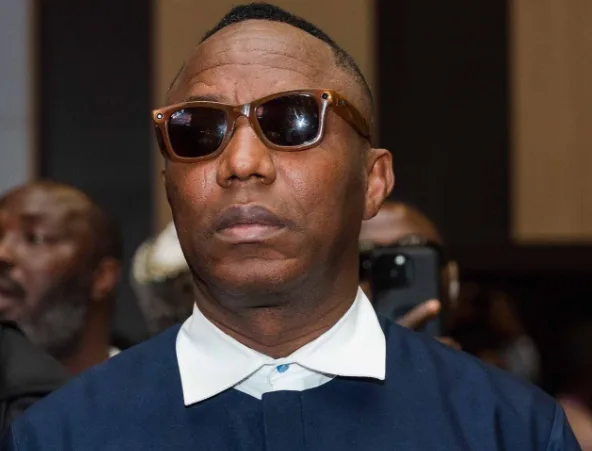
Human rights activist and African Action Congress presidential candidate for the 2027 election, Omoyele Sowore, has renewed his appeal to the Federal Government to legalise cannabis. He maintained that regulating the plant would generate substantial revenue and create job opportunities for the country, according to Punch.
In a statement posted on X, Sowore argued that the country is losing potential economic gains by destroying farms and prosecuting people in the trade. He pointed to North American jurisdictions, noting that Canada earned approximately CA$2.2 billion from recreational cannabis in the 2023–2024 fiscal year. He also cited tax collections from California and Colorado in 2024, which generated about $1.067 billion and $255.4 million respectively.
Presenting hypothetical projections based on an exchange rate of N1,300 to the dollar, Sowore suggested Nigeria could earn between $550 million and $2.2 billion annually. Under those scenarios, the figures would represent between N715 billion and N2.86 trillion each year. He acknowledged that the numbers remain illustrative and that actual earnings would rely on market size, taxation structures, licensing, exports, and regulatory efficiency.
Beyond government revenue, the activist highlighted potential employment across agriculture, pharmaceutical manufacturing, scientific research, and industrial hemp production. He urged the government to set up a framework that regulates production, backs local farmers, and protects public health instead of maintaining a total ban.
Sowore also criticised law enforcement bodies, including the National Drug Law Enforcement Agency, over continuing arrests related to the plant. His remarks followed the agency's recent arrest of an American basketball player at the Lagos airport over the alleged importation of cannabis.
Cannabis remains illegal across Nigeria under the Indian Hemp Act, which strictly forbids its cultivation, sale, importation, possession, and consumption. The National Agency for Food and Drug Administration and Control has also previously affirmed that all activities involving cannabis handling and possession remain unlawful in the country.