
Rema – HEIS Album: Tracklist, Review, Meaning & Story

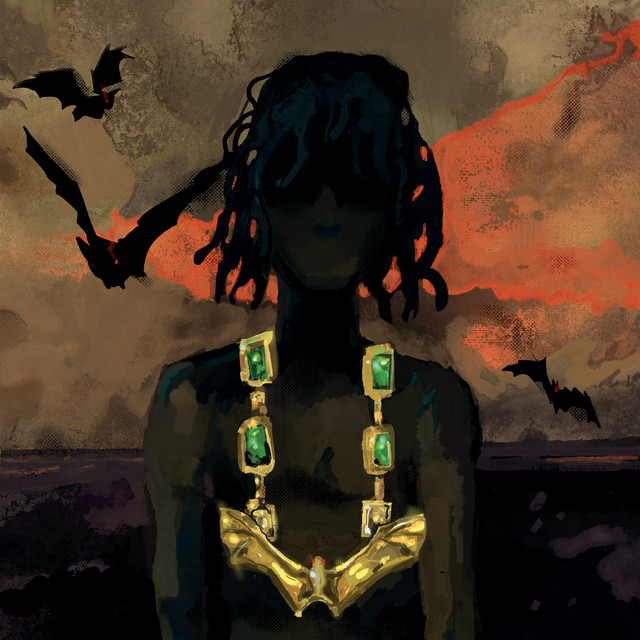
Rema – HEIS: The Album That Redefined His Sound and Started a New Era
After closing the Rave & Roses universe with RAVAGE in 2023, Rema entered the next stage of his career with something to prove.
He had already become a global superstar.
“Calm Down” had turned into one of the biggest Afrobeats records ever released, his international audience had expanded dramatically, and Rema was no longer being introduced simply as a promising young Nigerian artist.
He had become a major force in global pop music.
But Rema wasn’t interested in simply repeating what had already worked.
Instead, he went back to the studio and created one of the most experimental projects of his career.
On July 11, 2024, Rema released his second studio album, HEIS, through Mavin Records and Jonzing World.
The album marked a dramatic change from the romantic and atmospheric world of Rave & Roses.
Where Rave & Roses was built around love, emotion and the idea of Afrorave, HEIS was louder, more aggressive, more rooted in African rhythms and much more interested in challenging the listener.
It was Rema without the need to make himself comfortable for anyone.
Rema – HEIS Tracklist
The album contains 11 tracks:
- Martins Feelz
- HEHEHE
- Azaman
- Red Potion
- March Am
- MHEHEHE
- Yayo
- HEIS
- Trouble Maker
- Boulevard
- Benin Boys feat. Shallipopi
HEIS is intentionally compact compared with Rave & Roses.
Rather than creating a long album packed with different collaborations, Rema focuses heavily on his own voice, production ideas and artistic identity.
The result is a project that feels less like a traditional pop album and more like a statement.
What Does “HEIS” Mean?
The title HEIS is derived from the Greek word “Heis,” meaning “one.”
For Rema, the idea represents individuality, unity and being one with himself.
It also fits the album’s larger message.
Rema had reached a point where he wasn’t trying to fit into a particular category.
He wasn’t trying to be simply Afrobeats.
He wasn’t trying to be simply Afropop.
He wasn’t trying to become a Western pop artist.
He was creating music according to his own rules.
The title therefore becomes a statement of identity:
One Rema. One vision. One sound.
“Martins Feelz”
The album opens with “Martins Feelz.”
The title references Rema’s middle name, Martin, and the song immediately introduces the listener to the personal energy behind the project.
Instead of beginning with a huge commercial single, Rema starts the album with something that feels almost like a declaration.
There is confidence.
There is attitude.
And there is a sense that the artist is entering a completely different phase of his career.
The opening establishes one of the album’s most important themes:
Rema is no longer interested in proving that he can make hits.
He wants to prove that he can create an identity.
“HEHEHE”
Then comes “HEHEHE.”
The song became one of the major records surrounding the album campaign.
It was released before the album and immediately attracted attention because of its unusual production, repetitive vocal hook and aggressive delivery.
The title itself captures the energy of the song.
There is laughter, but it isn’t necessarily friendly laughter.
It feels like the laugh of somebody who knows something other people don’t.
Rema uses the record to project confidence and superiority while the production creates a chaotic, almost hypnotic atmosphere.
It is one of the clearest examples of how HEIS intentionally moves away from the polished international-pop sound that dominated parts of the Rave & Roses era.
“Azaman”
“Azaman” is one of the album’s most energetic songs.
The record is built around a strong African rhythmic foundation and Rema’s playful vocal delivery.
The title and lyrics draw from Nigerian street culture, while the production keeps the song accessible enough for a wider audience.
This balance is important.
Rema isn’t simply trying to make traditional street music.
He is taking elements of Nigerian street culture and putting them into his own futuristic musical world.
That approach runs throughout HEIS.
“Red Potion”
Fans of RAVAGE will immediately recognize “Red Potion.”
The song originally appeared on Rema’s 2023 EP and returns on HEIS as part of the album’s broader sound.
Its inclusion is significant because it creates a bridge between the previous era and the new one.
RAVAGE was described as the final chapter of the Rave & Roses universe.
“Red Potion” therefore becomes a kind of transition point.
The old era is still visible.
But the new era is already taking over.
“March Am”
“March Am” is another record where Rema embraces Nigerian slang, rhythm and attitude.
The title itself carries a sense of movement.
March forward.
Keep going.
Don’t stop.
That mentality reflects where Rema was in his career.
He had already achieved massive success, but HEIS doesn’t sound like an artist who is satisfied.
It sounds like someone who believes there is still another level to reach.
“MHEHEHE”
The album’s “MHEHEHE” section continues the strange and playful energy introduced earlier.
Rema uses unconventional vocal sounds, repetitions and rhythmic patterns to make the song feel almost like a musical experiment.
This is one of the areas where HEIS separates itself from conventional Afropop songwriting.
Not every record is designed around a traditional verse-chorus structure.
Some songs are built around atmosphere.
Others are built around rhythm.
Others depend almost entirely on Rema’s personality.
The album asks the listener to accept those unusual choices.
“Yayo”
“Yayo” is one of the album’s most energetic records.
Rema leans heavily into rhythmic delivery while maintaining the melodic instincts that have always been part of his music.
The song is built for movement.
It is the kind of record that works naturally in clubs, parties and live performances.
But beneath the energy is the same confidence that runs through the entire album.
Rema is presenting himself as an artist who has reached another level and knows it.
“HEIS”
The title track is the heart of the project.
“HEIS” brings together the album’s central themes: identity, confidence, power and individuality.
This is where the meaning behind the album title becomes especially important.
Rema isn’t presenting himself as one artist among many.
He is presenting himself as one of one.
That idea has been present throughout his career.
From the beginning, Rema’s appeal came partly from the fact that he didn’t sound like everyone else.
His voice was different.
His melodies were different.
His fashion was different.
His visual identity was different.
His approach to Afrobeats was different.
HEIS turns that difference into the central philosophy of the album.
“Trouble Maker”
The appearance of “Trouble Maker” creates another connection with RAVAGE.
The song previously appeared on the 2023 EP and returns here as part of the larger HEIS era.
Its inclusion reinforces the aggressive side of Rema’s artistry.
He isn’t interested in being predictable.
He isn’t interested in staying inside one musical box.
And he certainly isn’t interested in becoming a softer version of himself simply because his audience has grown.
The “trouble maker” identity becomes part of Rema’s larger artistic character.
“Boulevard”
“Boulevard” also has a connection to Rema’s earlier career.
The song originally appeared on his 2019 Freestyle EP, making its presence on HEIS particularly interesting.
That creates a direct line between the artist’s earliest project and his second studio album.
The teenage Rema who released “Boulevard” in 2019 was experimenting with his identity.
The Rema who brings it into the HEIS era is an established global superstar.
The song therefore feels like a reminder of how far he has travelled.
Five years earlier, he was introducing himself.
Now he is rewriting his own history.
“Benin Boys” feat. Shallipopi
The album closes with “Benin Boys,” featuring fellow Nigerian artist Shallipopi.
This collaboration is especially significant because both artists have strong connections to Benin City, Edo State.
The song became a celebration of their shared roots and the culture that shaped them.
Instead of presenting success as something that requires leaving one’s origins behind, “Benin Boys” turns those origins into a source of pride.
The record became one of the standout collaborations of the era and gave the album a strong Nigerian cultural identity.
It also demonstrated Rema’s ability to work with newer Nigerian artists while remaining firmly in his own lane.
The Importance of Benin City
Benin City is an important part of understanding Rema’s identity.
Rema has consistently spoken about the influence of his upbringing and Nigerian culture on his artistry.
With HEIS, that connection becomes more visible.
The album doesn’t feel like Rema trying to make African music sound acceptable to the rest of the world.
Instead, it feels like Rema taking pieces of Nigerian culture and presenting them with confidence on a global stage.
That difference matters.
He isn’t asking international listeners for permission.
He is inviting them into his world.
HEIS and African Identity
One of the strongest characteristics of HEIS is its African identity.
The album contains electronic and experimental elements, but the rhythmic foundation frequently comes from African music.
There are influences from Nigerian street sounds, traditional rhythms and contemporary Afrobeats.
The result is not an attempt to recreate old-school African music.
It is a futuristic interpretation of it.
Rema takes the past and pushes it forward.
That is one of the most interesting ideas behind his artistry.
HEIS Compared With Rave & Roses
The difference between Rema’s first two studio albums is enormous.
| Rave & Roses | HEIS |
|---|---|
| Romantic | Aggressive |
| Dreamy | Energetic |
| International pop influences | Stronger African identity |
| 16 tracks | 11 tracks |
| Several guest artists | Minimal features |
| Love-focused | Identity-focused |
| Expansive | Compact |
| Afrorave universe | New artistic era |
Neither approach is necessarily better.
They simply represent different moments in Rema’s development.
Rave & Roses was about showing the world what Rema could become.
HEIS was about refusing to let the world decide what he should become.
Why HEIS Sounds Different
A major reason HEIS feels different is the production.
The album is more aggressive and less concerned with conventional pop structures.
The drums often feel heavier.
The melodies can be repetitive.
The vocal performances are sometimes deliberately unusual.
There is more space for raw energy and experimentation.
This can make the project challenging on first listen.
But that is also part of its purpose.
Rema wasn’t attempting to create another album that sounded exactly like Rave & Roses.
He was trying to move.
Rema’s Growth as an Artist
One of the most interesting things about Rema’s discography is how quickly his artistic identity has developed.
In 2019, he was still a teenager.
His first EPs were short and experimental.
By 2022, he had released a full studio album and established the Afrorave concept.
By 2023, he had closed that chapter with RAVAGE.
Then HEIS arrived in 2024 and essentially said:
That was one era. This is another.
The progression feels intentional.
Rema has repeatedly shown that he doesn’t want to remain in the same musical place for too long.
The Global Superstar Problem
By the time HEIS arrived, Rema had already experienced something that many artists spend their entire careers chasing.
Global recognition.
But that success can create a problem.
Once an artist finds a formula that works internationally, there is pressure to repeat it.
For Rema, the obvious choice would have been to create another album full of songs that sounded like “Calm Down.”
Instead, he went in almost the opposite direction.
That decision tells you a lot about his priorities.
He values artistic identity over simply repeating a successful formula.
HEIS and the Future of Afrobeats
HEIS also contributes to a broader conversation about where Afrobeats is going.
The genre has become increasingly global, with African artists collaborating with musicians from Europe, America, Asia and other parts of the world.
But globalization can sometimes lead artists toward a more universal sound.
Rema takes a different approach.
He moves forward by becoming even more specific.
More Nigerian.
More African.
More experimental.
More himself.
That paradox is part of what makes his music interesting.
The more local the identity becomes, the more distinctive it can feel internationally.
Critical Reception
HEIS generated significant discussion because of how different it sounded from Rema’s earlier work.
Some listeners immediately connected with the project’s raw energy and experimentation.
Others found the album less accessible than Rave & Roses.
But regardless of individual opinion, the project succeeded in starting a conversation about Rema’s artistic direction.
And that is important.
An album that makes people debate where an artist is going can sometimes be more valuable than one that simply gives everyone another familiar hit.
HEIS as a Statement
At its core, HEIS is about control.
Rema is taking control of his image.
Control of his sound.
Control of his story.
Control of the expectations surrounding him.
After the enormous success of “Calm Down,” he could easily have allowed the global audience to define his identity.
Instead, he went deeper into his own world.
That is why HEIS feels less like a commercial product and more like an artistic statement.
Final Thoughts
Rema – HEIS is the sound of an artist refusing to stand still.
Released in July 2024, the album arrived after one of the biggest breakthroughs in modern Afrobeats and showed that Rema was not interested in simply repeating his previous success.
Instead, he created something louder, stranger, more aggressive and more deeply connected to African identity.
The album’s compact 11-track structure makes it feel focused.
Its limited guest appearances keep the attention on Rema.
And its experimental production gives him room to push beyond the sound that first made him famous.
From “Martins Feelz” and “HEHEHE” to “Azaman,” “Yayo,” “HEIS,” and “Benin Boys,” the album presents Rema as an artist who has become comfortable with being different.
If Rave & Roses introduced the world to Rema’s global ambitions, HEIS introduced the world to Rema without the filter.
No need to chase.
No need to copy.
No need to explain.
Just one artist.
One vision.
HEIS.
Discover more from Topcitytune Media
Subscribe to get the latest posts sent to your email.
More From This Artist


