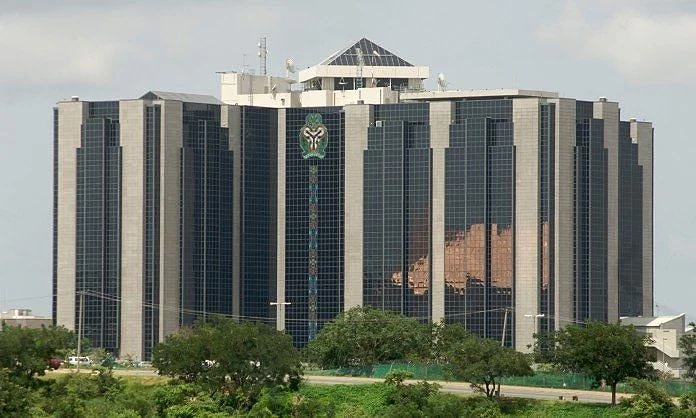
The Central Bank of Nigeria has rolled out strict operational guidelines for digital asset companies, ordering firms that issue foreign currency-pegged stablecoins to maintain at least N15 billion in paid-up capital. The directive forms part of a wider regulatory structure designed to oversee virtual assets and digital payment platforms across the country.
According to Punch, the fresh conditions were outlined in a regulatory document titled Regulations for the Operations of Non-Security Virtual Assets in Nigeria. The publication followed an official circular dated 5 November 2026, which was endorsed by Musa Jimoh, the Director of the Payments System Policy Department at the apex bank.
Under the new terms, digital tokens pegged to foreign currencies like the United States dollar fall into the Class 2 category, demanding the N15 billion financial threshold. Meanwhile, Class 1 issuers who offer naira-referenced tokens must hold a minimum paid-up capital of N10 billion. Other non-security virtual asset service providers face a N1 billion capital requirement, which must stay distinct from any capital pledged for licences from the Securities and Exchange Commission or other watchdogs.
The apex bank stated that capital reserves must be preserved strictly as cash in designated CBN accounts or invested in authorized Federal Government securities under the regulator's oversight. These funds cannot be mixed with customer deposits, routine operational cash, or underlying reserves backing issued tokens. Should an operator's capital drop below the legal benchmark, the firm must alert the regulator right away and present a recovery strategy within 10 working days.
Beyond standard capital rules, the regulator instructed stablecoin issuers to back all circulating tokens with 100 per cent equivalent reserve assets, supported by an extra two per cent reserve buffer against potential shortfalls. Customers must also have the right to redeem their holdings at par value, typically by the following working day, without incurring fees for regular requests.
The guidelines firmly ban algorithmic stablecoins and tokens that depend on other cryptocurrencies rather than fiat reserves. Furthermore, any stablecoin whose circulation surpasses N500 billion for 30 straight days, or counts over five million local users, will face tighter supervision as a systemically important financial instrument.