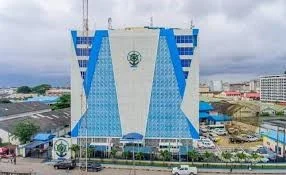
The Nigerian Maritime Administration and Safety Agency is preparing to roll out a digital monitoring platform designed to observe maritime greenhouse gas emissions in real time. The testing phase will begin with a pilot programme at the Tin-Can Island Port in Lagos.
Known as the Nigeria Maritime Continuous Emission Monitoring System, the project is a joint effort between NIMASA, the Nigerian Ports Authority, and climate technology company United Platform Solutions, according to Punch.
Dr Oma Ofodile, the Director of Marine Environment Management at NIMASA, announced the development during an event organized alongside the Federal Ministry of Marine and Blue Economy and UPS. The gathering took place on 17 November at the 31st United Nations Climate Change Conference held in Antalya, Türkiye.
Ofodile explained that the platform relies on information and communications technology to keep tabs on emissions across both onshore and offshore operations. She stated that the setup will boost environmental oversight, sharpen data collection, and provide regulators with dependable details to check pollution and implement standards.
Work on the venture began late in 2024. A feasibility study across four major Nigerian ports took place between August and September 2025 as part of the opening phase. The programme has now entered its second stage, which includes securing regulatory clearances and setting up the pilot run at Tin-Can Island Port.
Rohit Khattar, Chief Executive Officer of United Platform Solutions, stated that the partnership highlights the value of private tech firms working with government bodies on environmental issues. He noted that the broader objective is to aid African nations in meeting their climate goals through digital systems that supply clear data for policy choices.
The monitoring framework from UPS uses artificial intelligence alongside Internet of Things sensors to watch environmental conditions, including air and water quality, industrial discharge, and sound levels.
The move comes amid worldwide efforts to push the shipping sector toward reduced carbon outputs. The project is positioned to assist Nigeria in meeting international marine safety and environmental benchmarks, specifically Annex VI of the International Convention for the Prevention of Pollution from Ships, as well as the International Maritime Organisation’s 2023 greenhouse gas strategy.