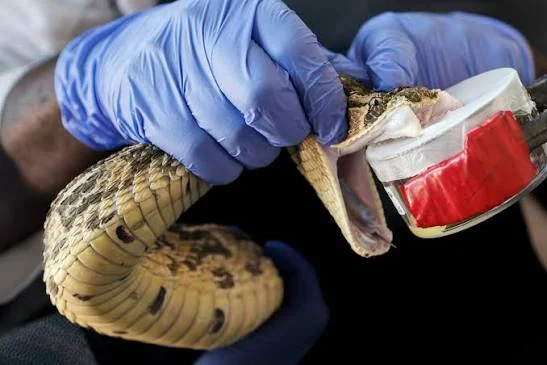
Nigeria continues to battle a deadly public health emergency as snakebites claim an estimated 2,000 lives every year across the country. Data from the Toxinological Society of Nigeria indicates that roughly 43,000 people suffer snakebites annually, leaving more than 1,700 survivors with permanent limb amputations, according to a report by Punch.
The medical crisis took a painful toll on Nigeria’s creative sector earlier in the year. In February 2026, 26-year-old classical soprano singer Ifunanya Nwangene died after a venomous snake bit her in her bed at her residence in Abuja.
In an effort to stop the poison, Nwangene tied a tight rope around her arm, a first-aid step health experts warn can aggravate physical injuries. She was rushed to a clinic that lacked antivenom before being transferred to the Federal Medical Centre in Jabi. Although medical workers administered antivenom there, she did not survive.
Her passing triggered heavy public anger and pushed the Nigerian Senate to call for compulsory antivenom supplies in hospitals across the federation. However, access to proper treatment remains extremely difficult for ordinary citizens.
Speaking at a Lagos medical training workshop on snakebite management, health specialist Abubakar Ballah explained that the carpet viper accounts for roughly 66 percent of snakebite deaths in the country. Other dangerous species commonly encountered include the Mali cobra, the Egyptian cobra, and the black-necked spitting cobra.
Rural farming settlements face the biggest danger, particularly throughout northern savanna communities and settlements along the Benue and Niger valleys. Farmers, hunters, fishermen, and pastoralists are frequently exposed, while children under five and pregnant women run the highest risk of fatal complications or miscarriages.
Victims who reach medical care still encounter steep financial obstacles. Specialized treatments such as EchitAb G and EchitAb Polyvalent currently cost between N45,000 and upwards of N250,000 per vial, with many patients requiring multiple doses to stay alive.