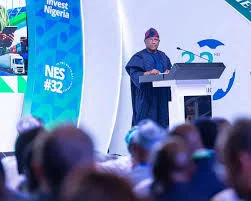
Nigeria needs to build at least 100 more major home-grown companies to turn the gains of current economic reforms into jobs, increased local production, and better living conditions for citizens.
Abdul Samad Rabiu, the founder and executive chairman of BUA Group, stated this on Monday while delivering the keynote address at the 32nd Nigerian Economic Summit in Abuja, according to The Sun Nigeria. Rabiu explained that while the federal government's economic policies are reviving investor confidence, policy stabilisation on its own cannot deliver prosperity without massive industrial expansion.
Rabiu commended the administration of President Bola Tinubu for carrying out foreign exchange, fiscal, and tax reforms, removing petrol subsidies, strengthening the banking sector, and backing infrastructure projects. He noted that these measures are beginning to remove long-standing structural obstacles that once discouraged large industrial projects across the country.
The industrialist highlighted better access to foreign exchange as a major turning point for manufacturers. He recalled how businesses previously struggled to secure foreign currency for equipment and raw materials, relying on direct allocations from the Central Bank of Nigeria (CBN).
Rabiu noted that since Olayemi Cardoso took over as CBN governor, legitimate companies can now purchase foreign exchange at prevailing market rates. He acknowledged that the adjustment period has brought hardships for households and firms, but insisted that consistent access to foreign currency provides the predictability manufacturers need for long-term investments.
Speaking on his company’s milestones, Rabiu revealed that BUA Foods and BUA Cement now hold a combined valuation above $17 billion on the Nigerian Exchange. BUA Foods accounts for over $10 billion, while BUA Cement is valued at roughly $7 billion.
He also shared that ongoing expansion projects in flour milling, pasta, noodles, edible oils, rice milling, and animal feed will double the group's capacity in those areas by 2027. To replicate this success nationwide, Rabiu challenged authorities to tackle financing shortages by unlocking funds from commercial banks, pension funds, insurance firms, and capital markets.