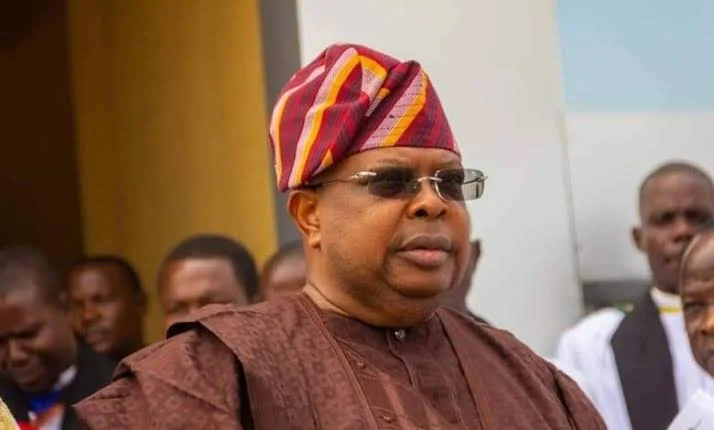
The Federal Government has assured electricity consumers that the ongoing power cuts across parts of the country will start to ease within the next 48 to 72 hours. Minister of Power, Joseph Tegbe, gave this assurance as authorities work to fix generation and transmission bottlenecks, according to Punch.
In a statement shared on his Facebook page on Friday, Tegbe explained that the disruptions stemmed from scheduled maintenance at the Egbin Power Station in Lagos, alongside gas shortages affecting several thermal generating plants. Egbin is Nigeria's largest thermal facility and accounts for roughly 16 per cent of the electricity fed into the national grid.
The minister noted that the shortfall forced grid managers to roll out load shedding in multiple locations. He specifically acknowledged the hardships faced by homes and businesses in four affected states, including Lagos and the Federal Capital Territory. Tegbe further revealed that acts of sabotage on vital transmission lines had limited the use of secondary supply lines, especially those serving Lagos.
According to Tegbe, generating units will be returned to service in stages, with the initial units scheduled to go back online between 48 and 72 hours. He added that the ministry is coordinating with industry operators to enhance gas delivery and speed up work on damaged facilities.
The situation has also caused friction between power sector players. The Transmission Company of Nigeria, TCN, rejected claims by Ikeja Electric that blackouts recorded on November 3 and 4 were caused by grid instability. TCN stated that shortfalls in gas supply and drop-offs in hydroelectric output were the genuine reasons behind the drop in power.
TCN clarified that it can only transport the electricity it receives from generation plants. The transmission firm claimed that 68 per cent of the feeder outages on Ikeja Electric's network came from frequency-control load shedding linked to low generation, while 26 per cent stemmed from Ikeja Electric's network faults and non-compliance with load allocations. TCN stated that its own maintenance and line limits accounted for just six per cent.
The clash followed an apology by Ikeja Electric to its Band A customers for failing to provide the mandatory 20 hours of daily supply on November 3 and 4. Tegbe maintained that the federal authorities, alongside TCN, the Nigerian Independent System Operator, and distribution firms, are collaborating to stabilize the network.