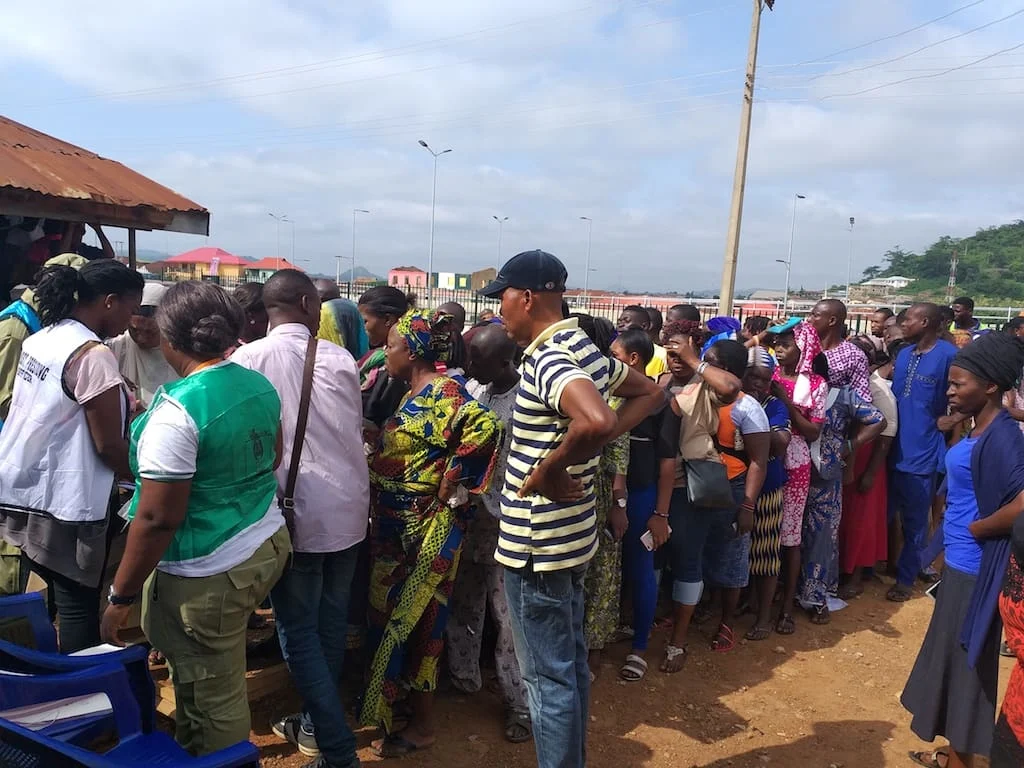
Serious concerns have emerged over the accuracy of Nigeria’s voter register as the country prepares for the upcoming general elections scheduled for January and February 2027.
The integrity of the baseline data held by the Independent National Electoral Commission (INEC) is facing intense scrutiny due to sharp mismatches between official voter counts and the country's demographic expansion, according to an analysis published by The ICIR.
In 1999, the nation's population stood at an estimated 115.8 million, while registered voters were around 57.94 million. Currently, the national population has jumped to an estimated 244 million, reflecting a growth of more than 110 percent, while the voter register grew by only 81.4 percent over the same timeline.
A major driver of the discrepancies is Nigeria's poor civil registration system. Figures from the National Population Commission show that only 53 percent of births and a mere 10 percent of deaths are formally recorded.
Because deceased individuals are rarely removed from the register, names can linger on the electoral roll decades after their deaths. Electoral records also showed sharp, erratic shifts over past election cycles, including a drop of 4.7 million registered voters between 2011 and 2015, despite rapid overall population growth during the same period.
These baseline issues directly affect voter turnout calculations, which have steadily declined from 52.3 percent in 1999 to an all-time low of 26.7 percent in the 2023 elections. Out of more than 93.4 million registered voters in 2023, only 24.9 million ballots were cast.
The report also recalled findings from the 2008 Justice Muhammadu Uwais electoral reform committee, which pointed out that Nigeria's electoral figures prior to 2011 suffered from significant credibility problems. With Africa Confidential already projecting historically low participation for the 2027 polls, the need for a verified demographic management system remains a central issue for Nigeria's electoral process.