The stunning defeat of the Republican Party in the United States midterm elections has triggered a lively debate within Nigeria's political landscape ahead of the 2027 general elections. The Democratic Party swept both chambers of Congress, claiming 255 seats in the House of Representatives and 54 in the Senate, while Republicans secured 134 House seats and 44 Senate seats.
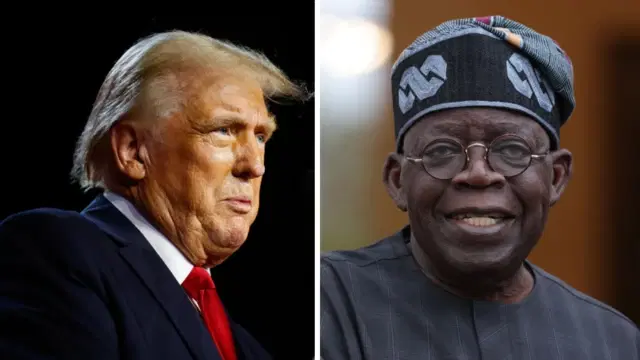
The dramatic outcome flipped long-held Republican territories such as Texas, South Carolina, and Kansas. Following the vote, political analysts and opposition figures in Nigeria began drawing comparisons between the political fate of United States President Donald Trump and Nigerian President Bola Ahmed Tinubu of the All Progressives Congress.
According to Vanguard, critics of the comparison argue that attempting to tie Trump's political fortunes directly to Tinubu is superficial. Commentators point out that the American midterms were heavily shaped by foreign military conflict with Iran, an issue completely separate from Nigerian governance. United States Vice President JD Vance directly acknowledged the impact of that military action, stating that "the reason we lost is the war."
However, reporting by THISDAYLIVE highlighted that economic distress played a decisive role in the American outcome, drawing parallels to the daily realities faced by Nigerians. Nearly 90 percent of United States voters cited the high cost of living as a crucial factor in their ballots, alongside rising fuel prices and trade tariffs. In Nigeria, citizens continue to navigate severe economic pressure, high inflation, power supply shortages, and security challenges.
The United States contest also saw historic upsets, including Democrat James Talarico securing a Senate seat in Texas. Talarico credited his win to rejecting divisive rhetoric, stating that his campaign embodied "a new kind of politics" rooted in community and mutual respect.
Back in Washington, internal finger-pointing among Republicans has escalated following the results. Despite roughly $500 million committed by billionaire businessman Elon Musk to support Republican candidates, voters largely rejected the administration's platform. For Trump, the remaining two years of his term now face stiff legislative oversight, with Democrats preparing to scrutinise trade tariffs, healthcare directives, and executive operations.
As Nigeria approaches its next presidential election cycle in 2027, the American results offer a fresh discussion point for both the ruling party and the opposition on how bread-and-butter economic issues shape voter decisions at the ballot box.